Stories
Architectural cinematics: showing a design the way a film would show it
Architectural cinematics bring a building or space cinematically into motion. How camerawork, light and rhythm give a design a story.
Author
Joey Heynens
Published
11 May 2026
Category
Stories

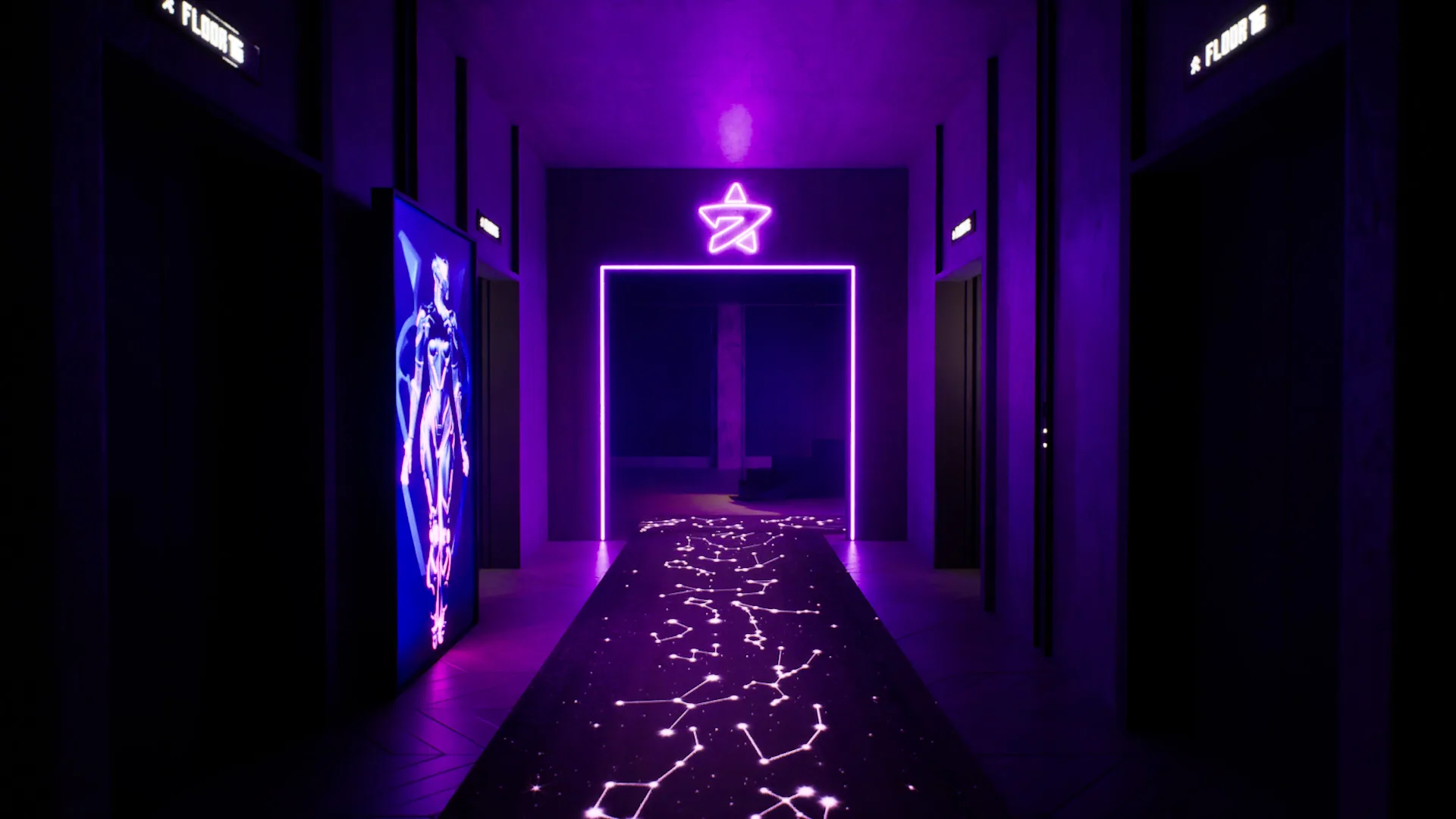
Architectural cinematics are cinematic 3D animations of buildings and spaces. Where a render shows a building, an architectural cinematic lets the building be experienced: the camera moves through it, the light changes, and the design gains the rhythm and tension of film.
This article is about what architectural cinematics are and how they give a design a story.
Why a building calls for film
Architecture is experienced in motion. You walk towards a building, you go inside, you move through the spaces, the light shifts with the time of day. A still image captures one moment of that. An architectural cinematic captures the experience itself.
That makes the difference for designs where the experience counts: the route through a building, the transition from outside to inside, the interplay of spaces. Things that stay abstract on a floor plan and frozen on a render come to life in a cinematic.
What sets an architectural cinematic apart
An architectural cinematic is not a tour through a 3D model. It is a directed piece of film. Three elements make the difference.
Camerawork
The camera tells the story. A slow, measured movement gives a building monumentality; a flowing walk-through makes a route feel self-evident. The camerawork borrows its language from film: lens optics, framing, pace.
Light
In a cinematic, light is not a fixed setting but a progression. A building can move from morning to evening, from cool to warm, from bright to intimate. That progression gives the design emotion. In our Black & White cinematic series, light is even the lead character.
Rhythm
A cinematic has a build-up: a beginning that sets the tone, a middle that lets the space be experienced, an end that stays with you. That rhythm is what turns an animation into film rather than a series of shots.
What are architectural cinematics used for?
- Real estate and property development — presenting a new-build project cinematically to buyers and investors;
- Architecture — showing a design the way it will be experienced, instead of the way it is drawn;
- Pitches and competitions — a plan that distinguishes itself through the way it comes into view;
- Hospitality — letting a space carry its atmosphere and experience.
For the broader context of moving imagery: see what is 3D animation.
Cinematic or render?
An architectural cinematic calls for a larger process than a set of stills. So the question is: what does the project need? When experience and route are central, a cinematic is strongest. When it is about a direct, shareable impression, a still image can suffice. Often they work together: the cinematic for the presentation, the stills for brochure and web.
Conclusion
Architectural cinematics show a design the way a film would show it: in motion, with light that changes and a rhythm that stays with you. They turn a building into not a picture, but an experience.
Are you working on a design that deserves to come into view cinematically? Discuss your project.
Joey Heynens · Beyond3D