Spaces
What is 3D interior visualisation? A guide for designers and clients
3D interior visualisation makes a space visible before it is built. A clear explanation of what it is, what it delivers and when to use it.
Author
Joey Heynens
Published
15 May 2026
Category
Spaces
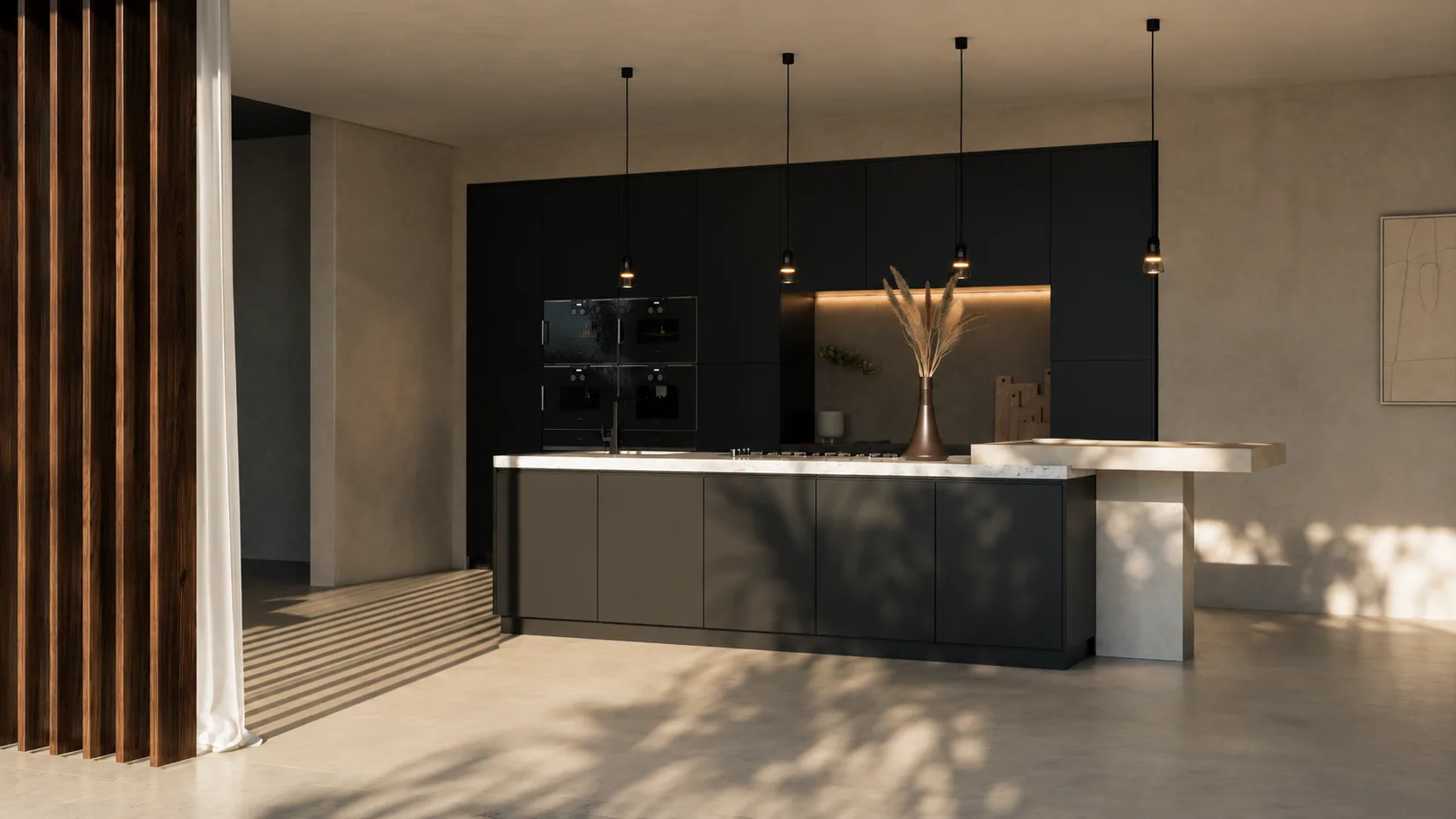
3D interior visualisation is the making of realistic images of a space that does not yet exist, or does not yet exist in that form. Based on a design, a space is built up digitally, with the right materials, the right light and the right atmosphere, so that clients can see and assess the result before anything is built.
In this article we explain what 3D interior visualisation is, what it delivers to a design and when to use it.
What 3D interior visualisation does
A floor plan and a material sample call for imagination. Not every client can muster that imagination, and that is exactly where a design process often goes wrong. A 3D interior visualisation takes that uncertainty away. The space becomes visible the way it will really feel:
- the proportions of the space and how the furniture relates to them;
- the material — how a floor, a wall or a fabric really looks in this space;
- the light — how daylight and artificial light shape the atmosphere at different moments;
- the atmosphere as a whole — the feeling the space evokes.
A good image does more than make something look nice. It makes a design understandable, assessable and, when it concerns a commercial space, sellable.
What is it used for?
3D interior visualisation is used in various phases and for various goals:
Design assessment
During the design process a visualisation helps to test choices. Does the material combination work? Does the light work? Is the space not too full? A render makes those questions concrete.
Presentation and approval
When presenting to a client or a stakeholder, an image convinces faster than an explanation. It reduces the risk of misunderstandings and speeds up approval.
Sales and marketing
For hospitality and commercial spaces, the visualisation is also a sales tool: a restaurant, hotel or shop can be presented, to investors, to guests, to the market, before the doors are open.
Which forms are there?
Not every interior image serves the same goal. Roughly there are two extremes:
- The atmospheric image — focused on feeling, emotion and experience. Here it is all about how the space feels.
- The technical render — focused on precision: dimensions, material representation and exact detailing.
Most projects sit somewhere in between. Which type of image suits which goal is covered in atmospheric image or technical render.
What makes a visualisation strong
The difference between a render that convinces and one that does not rarely lies in the software. It lies in three things:
- Light — light determines the atmosphere. A technically correct space with flat light feels lifeless; the same space with considered light feels real.
- Material — a material not only has to be right, but also has to respond to light as it would in reality.
- Composition — the camera position determines what the viewer sees and feels. A well-chosen frame tells the story of the space.
Those three elements are craft. They do not lend themselves to automation, they call for someone who can read a space.
When do you use 3D interior visualisation?
A visualisation is worthwhile when:
- the design is not yet built and a client has to be able to assess the result;
- an important decision or investment depends on understanding the space;
- a commercial space has to be sold or presented before delivery;
- material and light choices have to be tested before they are final.
Frequently asked questions
What is the difference between a 3D render and a 3D interior visualisation?
A 3D render is the technical end product, the calculated image. 3D interior visualisation is the whole craft around it: building up the space, choosing material, light and camera, so that the image really conveys the design convincingly.
What input is needed for an interior visualisation?
Usually a floor plan or 3D file, material choices and references or a moodboard. The more complete the input, the sharper the image. More on this in commissioning interior visualisation.
Who does Beyond3D make interior visualisations for?
For interior designers, hospitality studios, real estate developers and architects. See the high-end interior visualisation service or an example case.
3D interior visualisation is ultimately a means of communication. It translates a design into something everyone, even those who cannot read a floor plan, immediately understands and feels.
Joey Heynens · Beyond3D