Spaces
Hospitality visualisation: selling a restaurant or hotel before it exists
In hospitality a 3D visualisation is not a picture but a sales instrument. How imagery makes a hospitality concept convincing, for investors, partners and guests.
Author
Joey Heynens
Published
8 May 2026
Category
Spaces
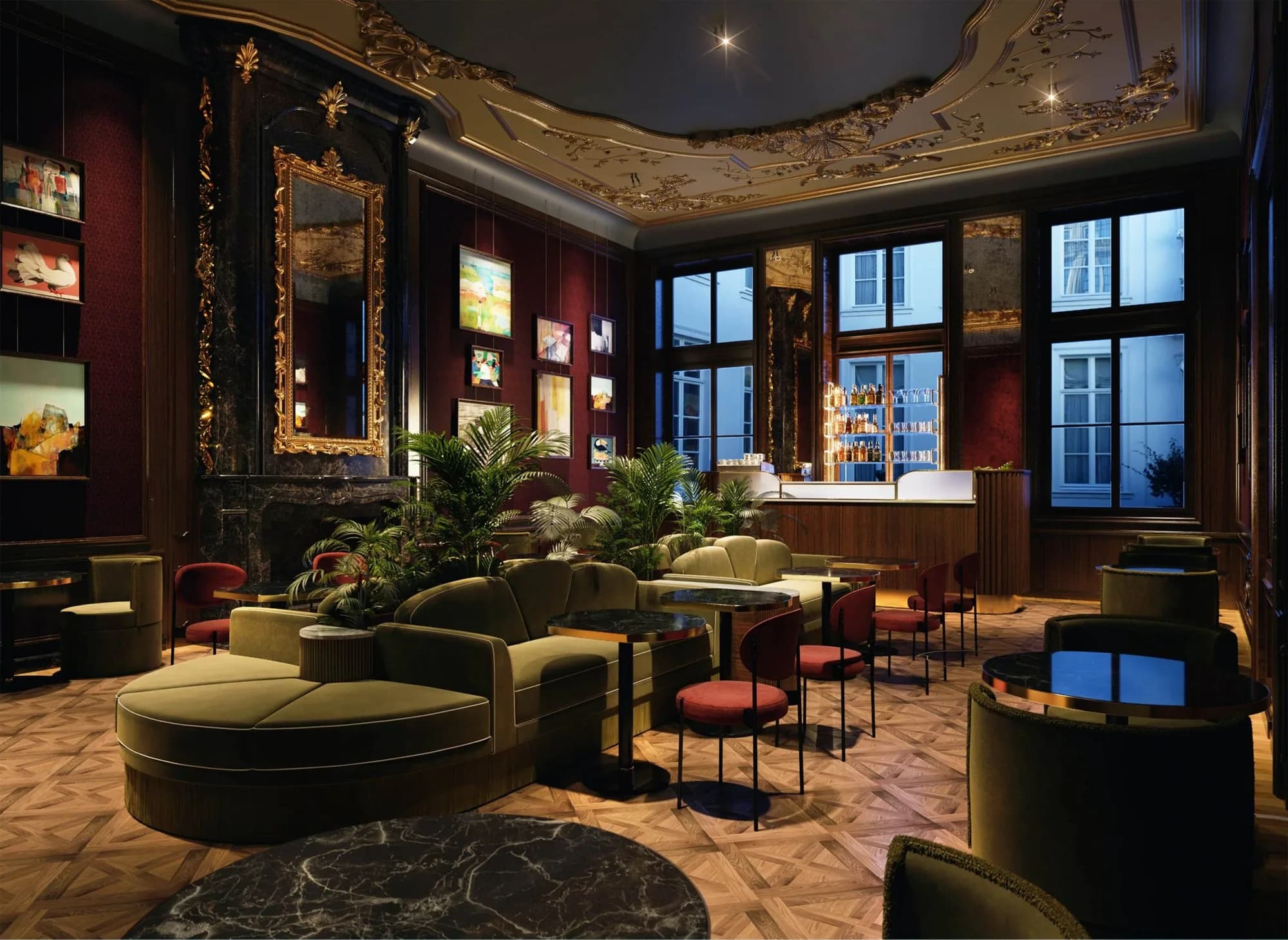
In hospitality a 3D visualisation is rarely just a design aid. It is a sales instrument. A restaurant, hotel or bar often has to convince before a single wall stands, an investor, a landlord, a franchise partner or the first guests. The visualisation is what makes that concept tangible.
This article is about what makes hospitality visualisation different from an ordinary interior render.
Why hospitality calls for imagery
A hospitality concept sells a promise: an evening, an atmosphere, an experience. That promise is hard to explain on paper. A floor plan shows the layout, but not the feeling, and in hospitality it is precisely that feeling that is the product.
A strong visualisation bridges that. It shows:
- how a guest enters and experiences the space;
- how the light changes the evening, from lunch to dinner to late bar;
- how material, colour and detail together form an identity;
- how the concept distinguishes itself from what already exists.
Imagery as a sales instrument
In hospitality, visualisation is used at moments when something is at stake.
The pitch to investors
Financing for a hospitality venue is about trust. An investor has to believe the concept works. A visualisation makes the difference between "an idea for a restaurant" and "this restaurant", it makes the promise concrete and assessable.
The presentation to partners and landlords
When securing a location or a partner, the same mechanism works. Whoever can show the end result negotiates from a stronger position.
Marketing before the opening
A hotel or restaurant can build awareness and bookings before the doors are open. The visualisation provides the imagery for the website, social media and the press, months in advance.
What makes hospitality visualisation technically different
A hospitality render is not just an interior image. A few things call for extra attention:
- Atmosphere per time of day — a hotel bar in daylight is a different space from the same bar in the evening. Often several lighting situations are needed.
- The human scale — hospitality is about people in the space. The image has to feel like a place you want to be, not like an empty set.
- Detail that carries the concept — the tableware, the bar, the lighting, the textile choice: in hospitality the detail tells the story.
In the case for the Marriott Hotel and the Hudson restaurant that is the starting point: not showing the space, but the experience.
From concept to image
The approach for a hospitality project roughly follows the line we describe in from moodboard to render: from the identity of the concept we work towards material, light and atmosphere. The difference lies in the goal, every image has to not only show the design, but sell the concept.
When is hospitality visualisation worthwhile?
Almost always when a process precedes the opening:
- when seeking financing or investors;
- when securing a location or partner;
- for the marketing and press campaign for the opening;
- when rolling out a concept across multiple venues.
Do you have a hospitality concept that needs to come into view convincingly? Discuss your project and we will look at what the concept needs in order to sell.
Joey Heynens · Beyond3D