Real estate
Exterior, interior, bird's-eye: which real estate images do you need?
A real estate project rarely calls for one type of image. An overview of the types of real estate visualisation and which image suits which goal.
Author
Joey Heynens
Published
4 May 2026
Category
Real estate
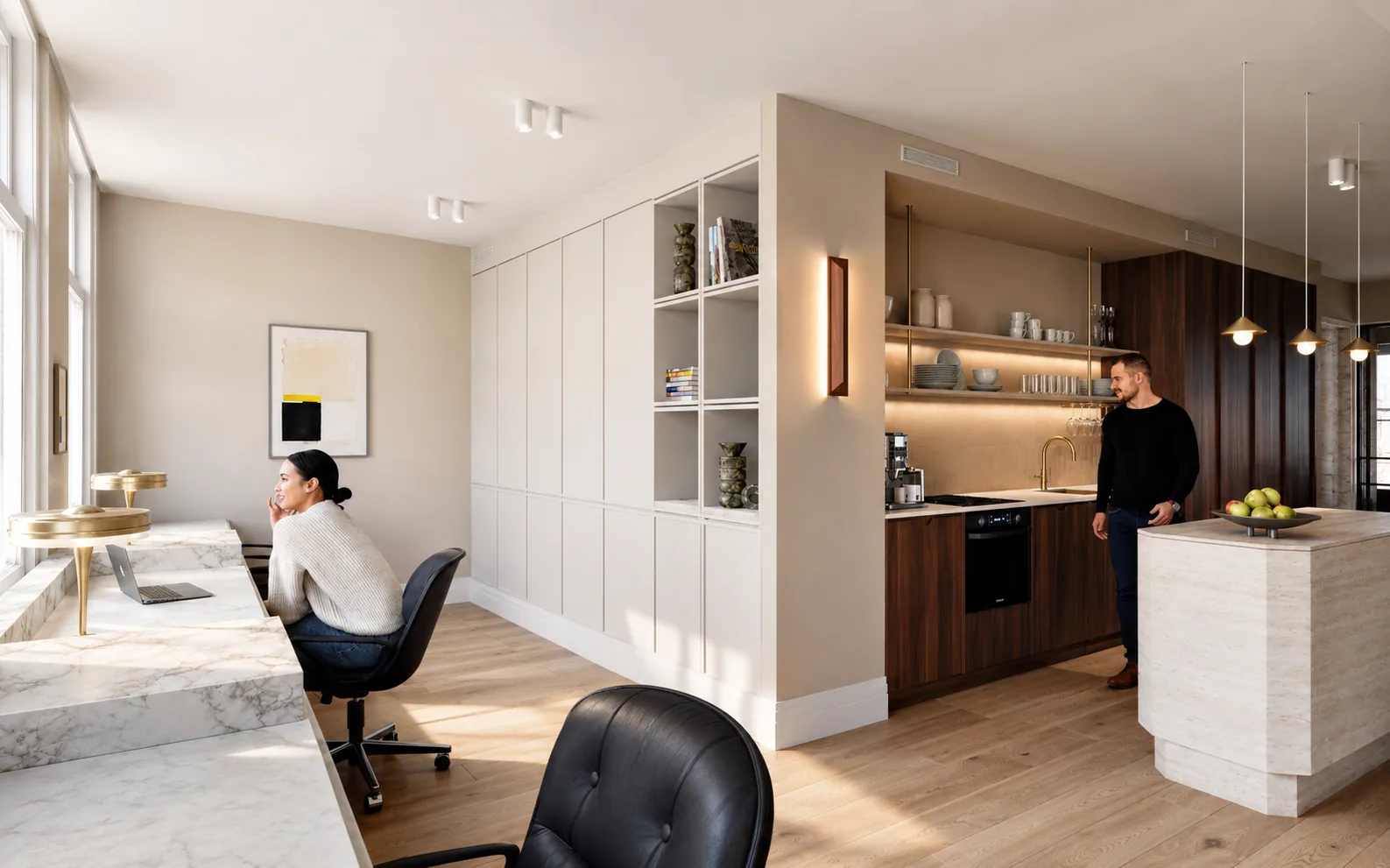
A real estate project rarely calls for one type of image. A development has to show the architecture, the homes, the location and sometimes a whole area. Each of those stories calls for a different kind of visualisation.
This article gives an overview of the types of real estate imagery and helps determine which image suits which goal.
Exterior images: the building in its surroundings
The exterior image shows the building the way a passer-by will soon see it: the architecture, the material, the relation to the street and the neighbours.
This type of image is strong when:
- the architecture itself is a selling point;
- the location and the surroundings are important to the buyer;
- a project has to visually distinguish itself from the neighbourhood.
An exterior image often determines the first impression of an entire project, on the cover of the brochure and at the top of the website.
Interior images: the home as a place to live
Where the exterior sells the building, the interior image sells the living. It shows the space, the light and the atmosphere of the home itself.
Interior images are indispensable when:
- homes are sold before they are built;
- a project has multiple home types that buyers have to be able to compare;
- the finish and atmosphere play a role in the price range.
The approach to this touches on interior visualisation. For the way of working behind a strong interior image: read from moodboard to render.
Bird's-eye views: the plan at a glance
A bird's-eye view shows the project from above. It makes the urban layout clear: the floor plan of the area, the position of the buildings, the outdoor space and the infrastructure.
This image is valuable for:
- larger projects with multiple buildings or phases;
- area development, where the coherence of the plan counts;
- presentations to the municipality or stakeholders.
Animations: moving through the project
Where a still shows one moment, an animation takes the viewer through the whole project: along the facade, into the complex, through a home. An animation is powerful for campaigns, presentations and online sales, but calls for a larger process. A 3D animation is a separate production alongside the stills.
Which image for which goal?
A quick guide:
| Goal | Most important image |
|---|---|
| First impression, brochure cover | Exterior image |
| Selling homes per type | Interior images |
| Showing the urban plan | Bird's-eye view |
| Campaign and presentation | Animation |
| Support among the surroundings | Bird's-eye view and exterior |
Often it is a set, not a single image
In practice a real estate project works with an image set: an exterior image for the first impression, interior images per home type, and for larger plans a bird's-eye view. The art lies in choosing the right mix for the project and the sales goal, without producing unnecessary imagery.
Want to determine which image set your project needs? Discuss your project and we will establish the right mix together.
Joey Heynens · Beyond3D