Real estate
3D visualisation for area development: making a plan tangible for residents and stakeholders
In area development a plan not only has to sell, but also to win support. How 3D visualisation makes a development tangible and discussable for the surroundings.
Author
Joey Heynens
Published
20 April 2026
Category
Real estate
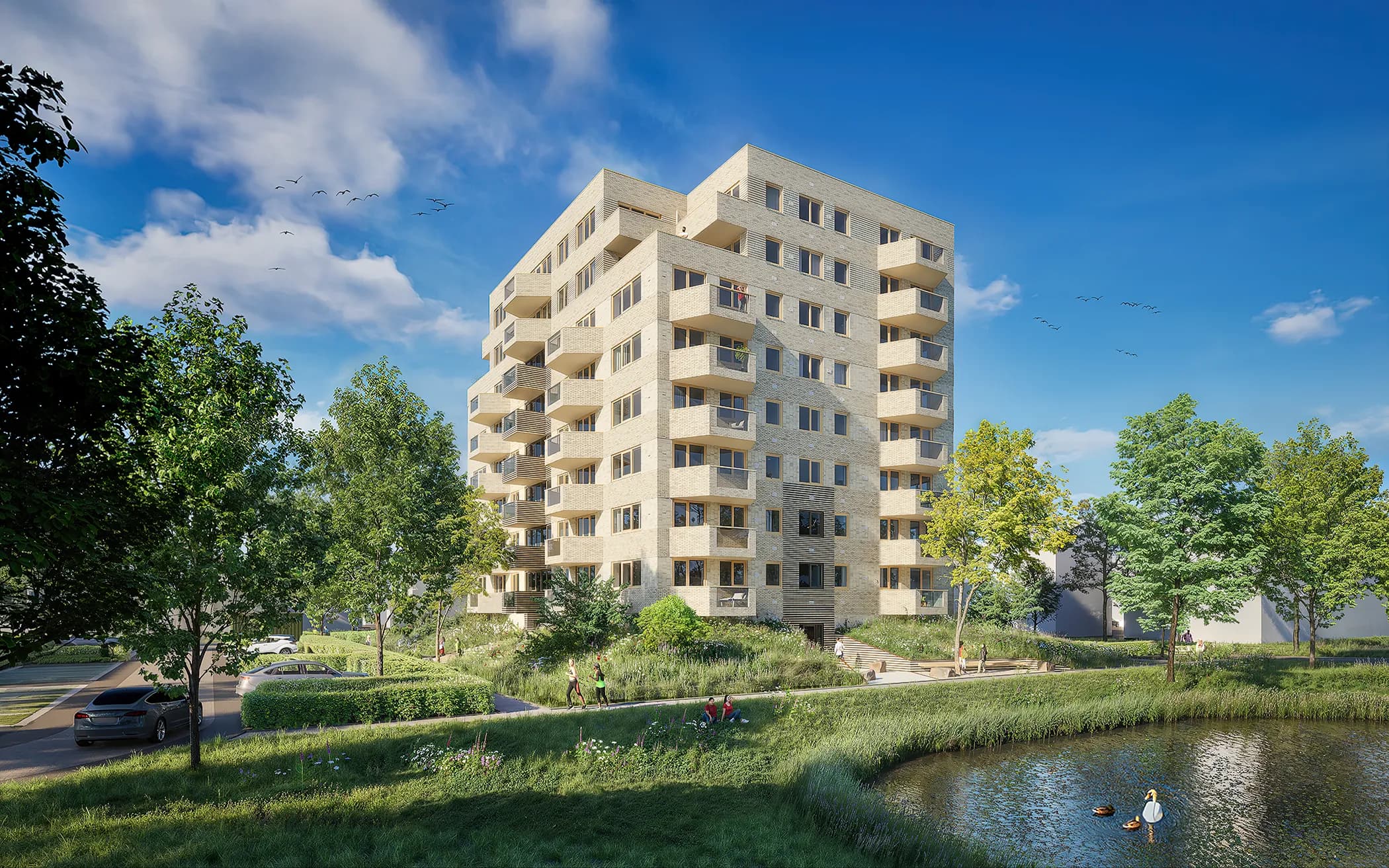
In area development there is more at play than sales. A plan for a new neighbourhood, a redevelopment or an area transformation touches a whole environment: residents, businesses, the municipality, interest groups. That plan does not only have to convince, it has to win support.
This article is about the role of 3D visualisation in that process.
Why area development calls for imagery
An area development is large, complex and abstract. It plays out over years, in phases, on a scale that is hard to grasp on paper. It is precisely because of this that resistance arises: people fill in the unknown with their concerns.
A floor plan and an explanation are then not enough. Whoever presents the plan only on paper asks the surroundings to have trust in something they cannot see. Visualisation changes that: it makes the plan visible, and thereby discussable.
What 3D visualisation contributes to support
A strong visualisation of an area development does three things at once.
Making the plan understandable
A bird's-eye view or a series of eye-level images shows how the area will work: where the buildings stand, how the streets run, where the greenery and the public space are. Everyone, including those who cannot read an urban drawing, immediately sees the plan.
Making the concerns concrete
Resistance is often about specific points: the height of a building, the view from an existing home, the busyness on a square. Visualisation makes those points discussable. Instead of an abstract discussion, a conversation arises about a concrete image.
Showing the ambition
A development also brings something good: a more beautiful public space, more greenery, a livelier area. Visualisation shows that ambition in a way a text cannot.
Which images suit area development?
An area development usually calls for a combination:
- Bird's-eye views that show the urban layout and the coherence;
- Eye-level images that show how the area will soon feel for those walking through it;
- Phase images that make the development over time clear;
- sometimes an animation or immersive 3D experience for a participation evening or information centre.
Which type of image serves which goal is explained in which real estate images do you need.
Imagery that is honest
In area development there is an important condition: the imagery has to be honest. A visualisation that looks more beautiful than reality can win a presentation in the short term, but cost trust in the long term. Residents recognise the difference between a plan that is right and a plan that is flattered.
Good visualisation for support shows the plan the way it will really become: ambitious where it is ambitious, and realistic about what changes. That is what makes a conversation with the surroundings constructive.
Conclusion
In area development, 3D visualisation is not a sales picture but a communication instrument. It makes a complex plan understandable, makes concerns discussable and shows the ambition, honestly and concretely.
Are you working on an area development that has to bring the surroundings along? Discuss your project and we will look at how imagery can support the conversation.
Joey Heynens · Beyond3D